
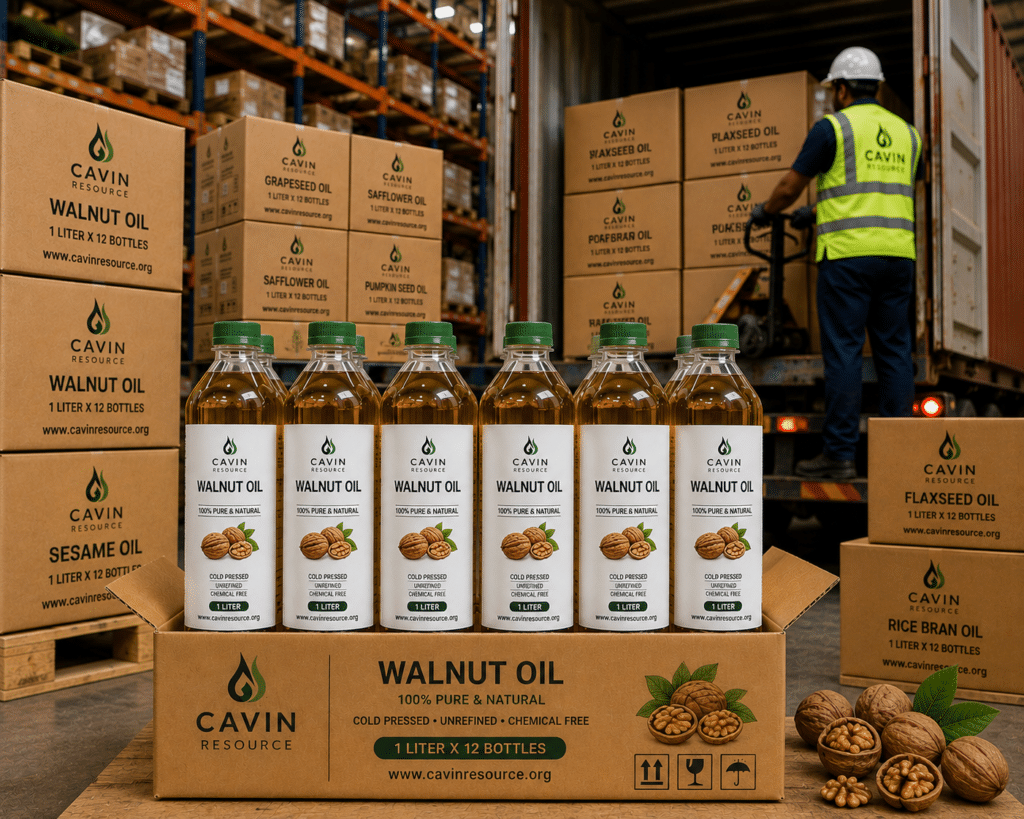
A Distinctive Flavor With Real Formulation Implications
Walnut oil brings an earthy, slightly bitter, unmistakably “walnut” flavor to whatever it’s added to. That distinctiveness is exactly why it’s chosen for certain applications — and exactly why it needs careful dosing in others where a more neutral profile is wanted.
Cold-Pressed Is the Standard for Flavor Retention
Most walnut oil intended for culinary flavor applications is cold-pressed, since heat processing tends to diminish the characteristic flavor that’s usually the entire reason for choosing walnut oil over more neutral alternatives.
Oxidative Stability Is a Genuine Constraint
Walnut oil’s fatty acid profile, rich in polyunsaturated fats, makes it one of the less stable specialty oils in terms of shelf life. Manufacturers should factor this into product shelf-life claims and storage/handling guidance rather than assuming standard vegetable-oil stability applies.
Where It’s Commonly Used
Finishing oils, salad dressings, certain baked goods, and confectionery applications where the walnut flavor is a deliberate formulation choice are the most common use cases. It’s rarely positioned as a general-purpose cooking oil given both its cost and stability profile.
Sourcing Checklist
- Confirm cold-pressed processing and request flavor samples
- Ask for oxidative stability data and recommended shelf life
- Clarify storage conditions needed to protect quality through your supply chain
- Request current COA and any relevant allergen documentation
Contact our team for current walnut oil availability, specifications and bulk pricing.

