
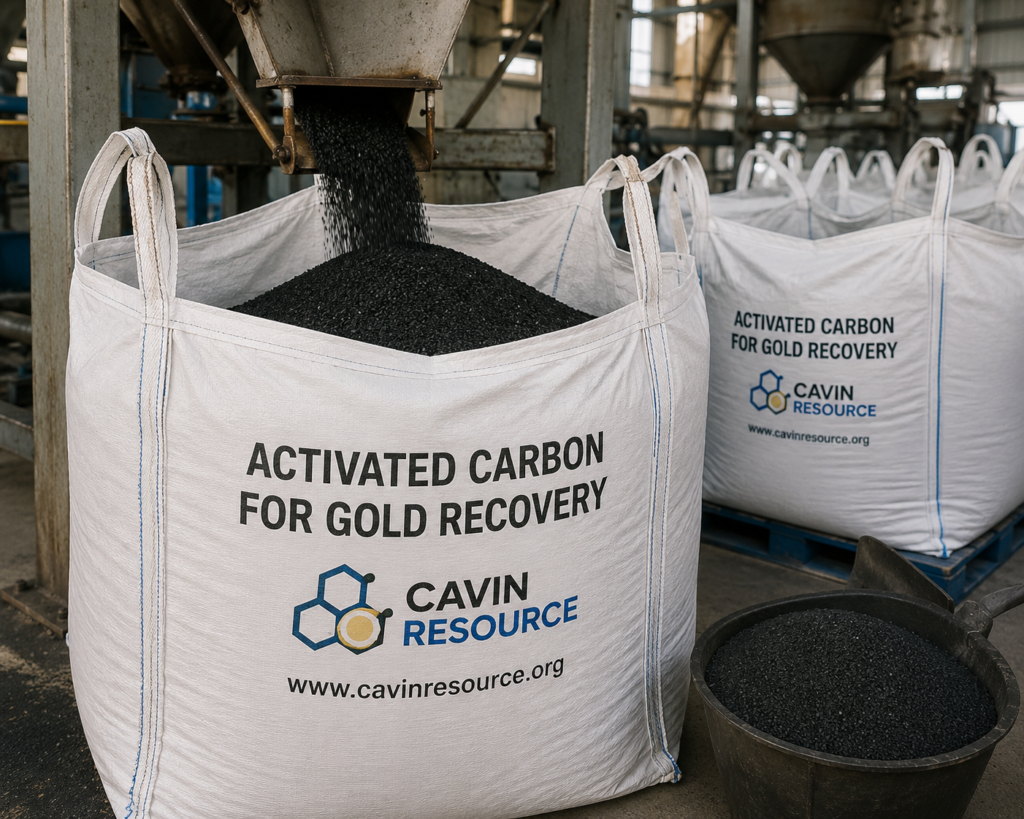
The Workhorse of Modern Gold Recovery
After gold has been dissolved into a cyanide leach solution, it still has to be recovered from that solution — and for most operations today, activated carbon is how that happens. Carbon-in-pulp (CIP) and carbon-in-leach (CIL) circuits both rely on activated carbon’s ability to adsorb gold-cyanide complexes from solution, concentrating the gold onto carbon that can then be stripped and refined.
CIP vs. CIL: What’s the Difference?
The core adsorption chemistry is the same in both processes; the difference is timing. CIP adds carbon after leaching is largely complete, while CIL adds carbon into the same tanks where leaching is still happening. CIL can improve recovery on ores prone to preg-robbing, since gold is adsorbed onto carbon before competing carbonaceous material in the ore has a chance to do the same.
What Makes One Activated Carbon Better Than Another
Not all activated carbon performs equally in gold adsorption service. Particle size distribution, hardness (resistance to attrition), pore structure, and activity level (often measured via standard test methods) all affect how much gold a given carbon can load and how long it survives mechanical wear in an agitated tank circuit.
Attrition and Carbon Losses
Carbon loss through attrition is a real operating cost, not just a theoretical concern. Softer or poorly manufactured carbon breaks down faster, increasing both replacement carbon costs and the risk of fine carbon carryover into tailings, taking adsorbed gold with it.
Evaluating Carbon for Your Circuit
- Request activity and hardness specifications, not just a generic product name
- Confirm particle size distribution matches your screening and tank design
- Ask for data on gold loading capacity from comparable operations
- Discuss packaging and logistics for ongoing bulk replenishment
Contact us to discuss activated carbon specifications, availability and bulk pricing for your CIP or CIL circuit.

