
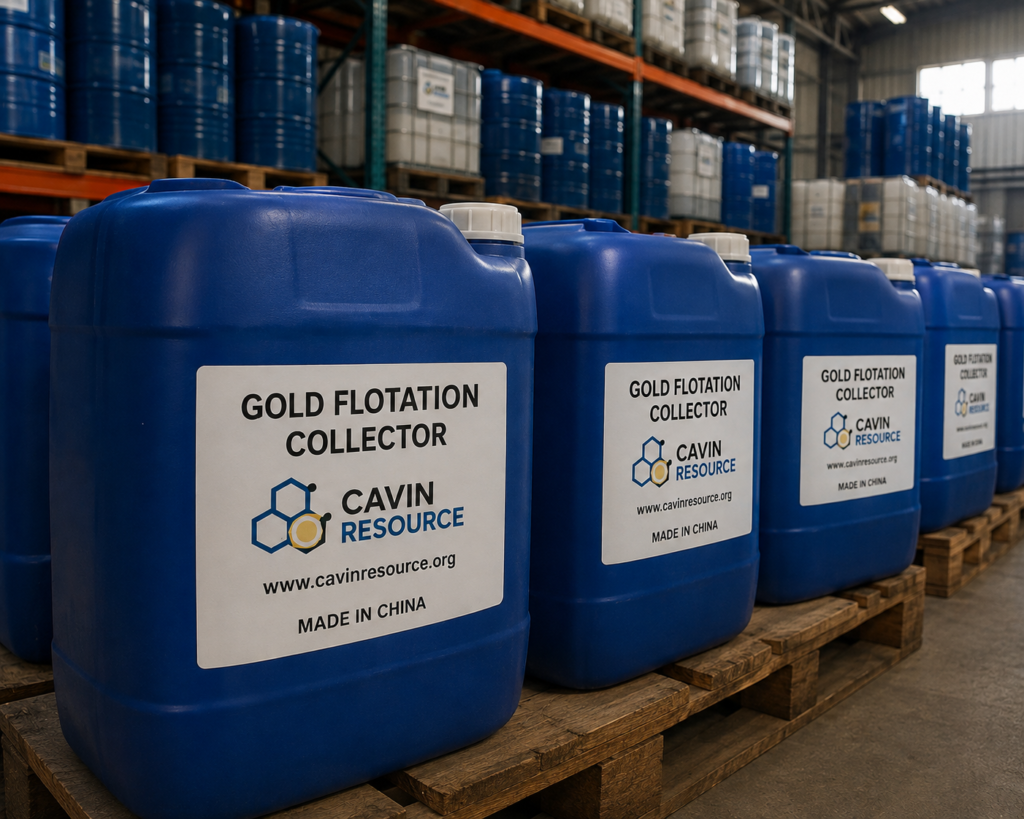
Making the Mineral Want to Float
Most sulfide minerals aren’t naturally hydrophobic enough to attach reliably to air bubbles on their own. Collectors change that by adsorbing onto the mineral surface and making it water-repellent, which is what actually allows flotation to separate valuable minerals from gangue in the first place.
Collector Families Commonly Used in Gold Circuits
Gold flotation circuits, especially where gold is associated with sulfide minerals like pyrite or arsenopyrite, commonly use xanthate-type collectors, sometimes alongside secondary collectors for specific mineral associations. The right choice depends heavily on which sulfide minerals are actually carrying the gold in your ore.
Selectivity Is the Real Differentiator
Two collectors can both successfully float gold-bearing sulfides while producing very different concentrate grades, because selectivity — how well the collector avoids floating unwanted gangue — varies significantly between collector chemistries. This is usually a bigger lever for improving concentrate grade than dosage adjustments alone.
Dosage, Conditioning Time and pH
Collector performance depends on more than just how much you add. Conditioning time, circuit pH, and the sequence of reagent addition relative to activators and depressants all affect how effectively a collector actually attaches to target minerals.
Before Committing to a Collector
- Identify which sulfide minerals in your ore are actually carrying the gold
- Bench-test collector selectivity against your specific ore, not a generic reference ore
- Request current TDS and SDS documentation
- Clarify dosage ranges validated for similar mineralogy
Reach out for collector options, technical documentation and bulk pricing for your gold flotation circuit.

