
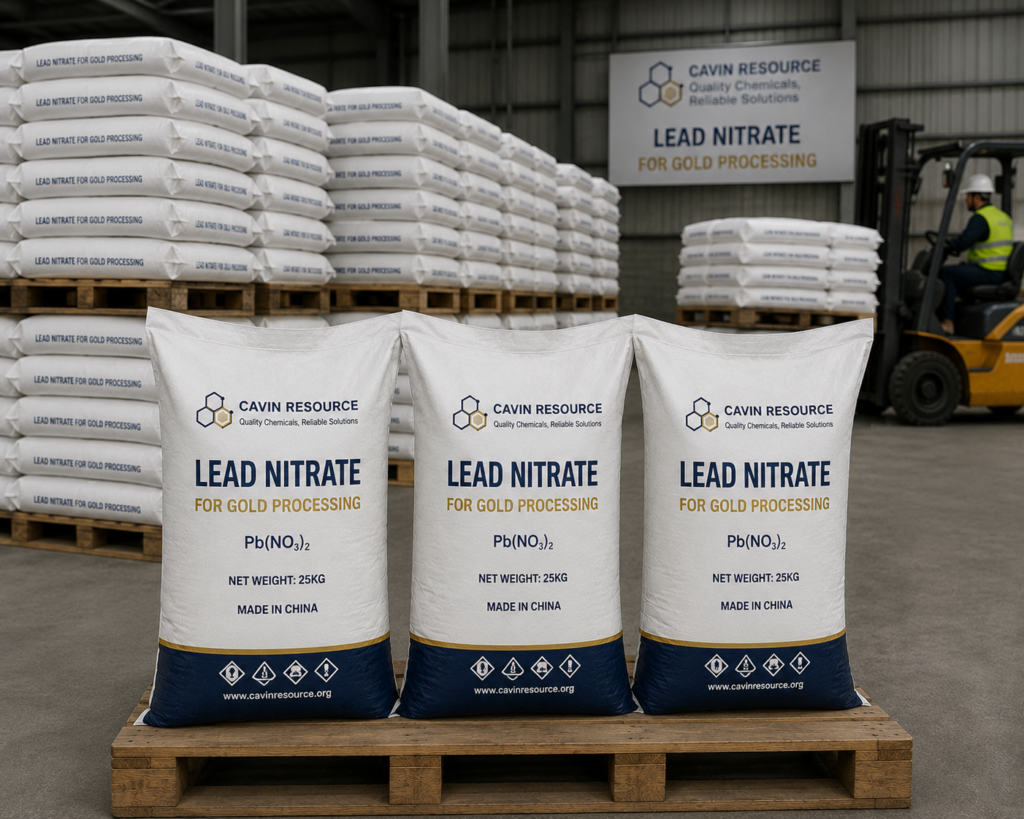
A Small-Dose Additive With an Outsized Effect
Lead nitrate rarely gets top billing in discussions of gold processing chemistry, but in many cyanidation circuits it plays a quiet, important role as a leach-assist reagent. Added in relatively small quantities, it’s used in select circuits to help address preg-robbing behavior and improve gold dissolution kinetics, particularly on ores containing certain sulfide minerals.
Why Ore Chemistry Determines the Benefit
Not every ore responds to lead nitrate addition. Its effectiveness is closely tied to the specific mineralogy present — particularly sulfide species that can otherwise interfere with cyanide leaching. This is exactly the kind of variable that metallurgical test work needs to confirm before committing to a dosing regime at plant scale.
Dosage Control Is the Whole Game
Because lead nitrate is used at low concentrations relative to other reagents in the circuit, small dosing errors can have a disproportionate impact — either failing to deliver the intended benefit or introducing unnecessary lead into tailings streams. Consistent dosing equipment and regular process monitoring matter more here than with bulk reagents.
Environmental and Handling Considerations
Lead compounds carry well-known environmental and occupational health considerations. Storage, handling and tailings management should follow the product SDS and any applicable heavy-metal discharge regulations in your jurisdiction — this isn’t a reagent to treat casually just because dosage volumes are small.
Before You Order
- Confirm the specific sulfide mineralogy in your ore that justifies lead nitrate addition
- Request the current TDS, SDS and COA for the batch
- Clarify packaging and handling requirements suited to low-dose reagent systems
- Check local regulatory requirements around lead-bearing tailings
Reach out to our team if you’d like help sourcing lead nitrate alongside the documentation your process and compliance teams will need.

