
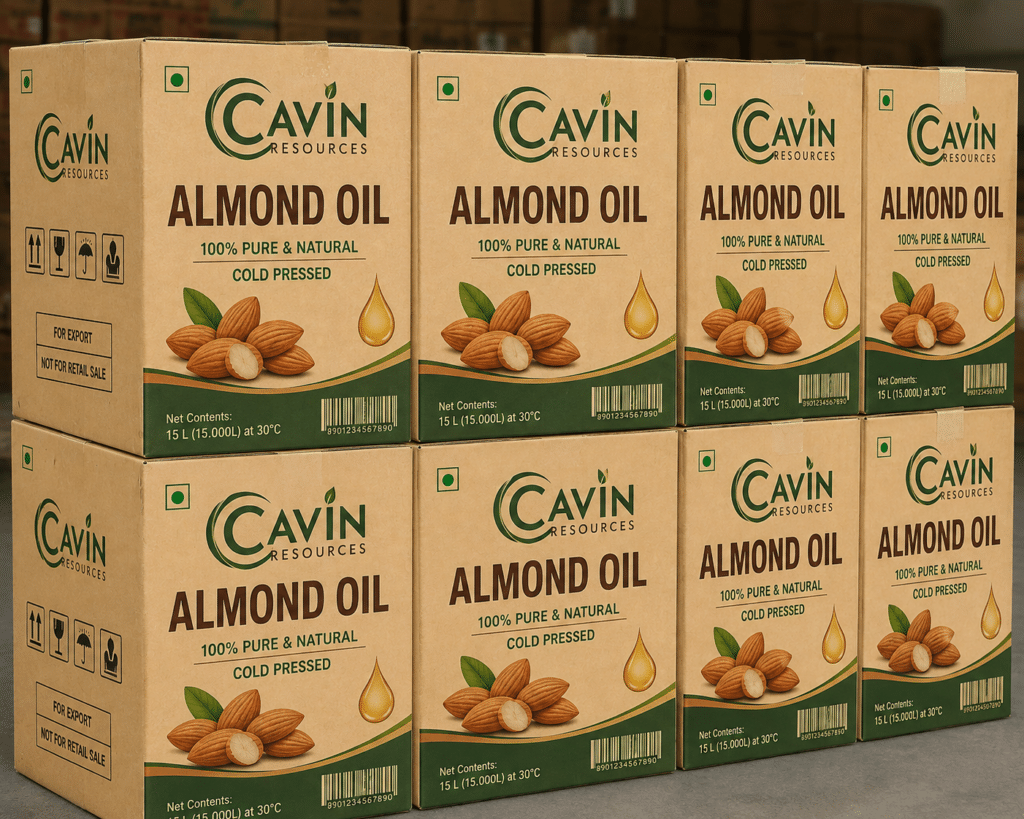
Why Almond Oil Needs More Care Than It Gets
Bulk almond oil often gets stored the same way as more stable commodity oils, but its higher unsaturated fat content makes it noticeably more sensitive to heat, light and oxygen exposure. Storage conditions that would be fine for a more saturated oil can shorten almond oil’s usable shelf life considerably.
Temperature Control
Cool, consistent storage temperatures slow the oxidation reactions that cause rancidity. Fluctuating temperatures — even within a nominally acceptable range — can accelerate degradation more than a stable, slightly higher temperature. Consistency matters as much as the absolute number.
Light Exposure Matters More Than Expected
Light, particularly UV exposure, catalyzes oxidative reactions in unsaturated oils. Opaque or dark storage containers, and storage away from direct sunlight, meaningfully extend usable shelf life compared to clear containers in bright storage areas.
Container Material and Headspace
Container material affects both light exposure and, in some cases, chemical interaction with the oil. Minimizing headspace (air space above the oil in a container) reduces oxygen exposure, which is part of why properly filled, sealed containers outperform partially-full ones in extended storage.
Signs of Rancidity to Monitor For
- Off odors — a sharp, paint-like or stale smell distinct from the oil’s normal nutty aroma
- Changes in color or clarity
- Elevated peroxide value on periodic testing, even before sensory changes are obvious
- Any unexpected flavor changes if used in sensory-tested applications
Contact us for current specifications, packaging options and bulk pricing on almond oil suited to your storage capabilities.

