
A Naturally Balanced Fatty Acid Profile
Hemp seed oil is often highlighted for its roughly 3:1 ratio of omega-6 to omega-3 fatty acids — a balance considered favorable compared to many common vegetable oils, which tend to be far more skewed toward omega-6. This is a large part of its appeal in nutraceutical and functional food formulations.
Distinct From Hemp Extract or CBD Products
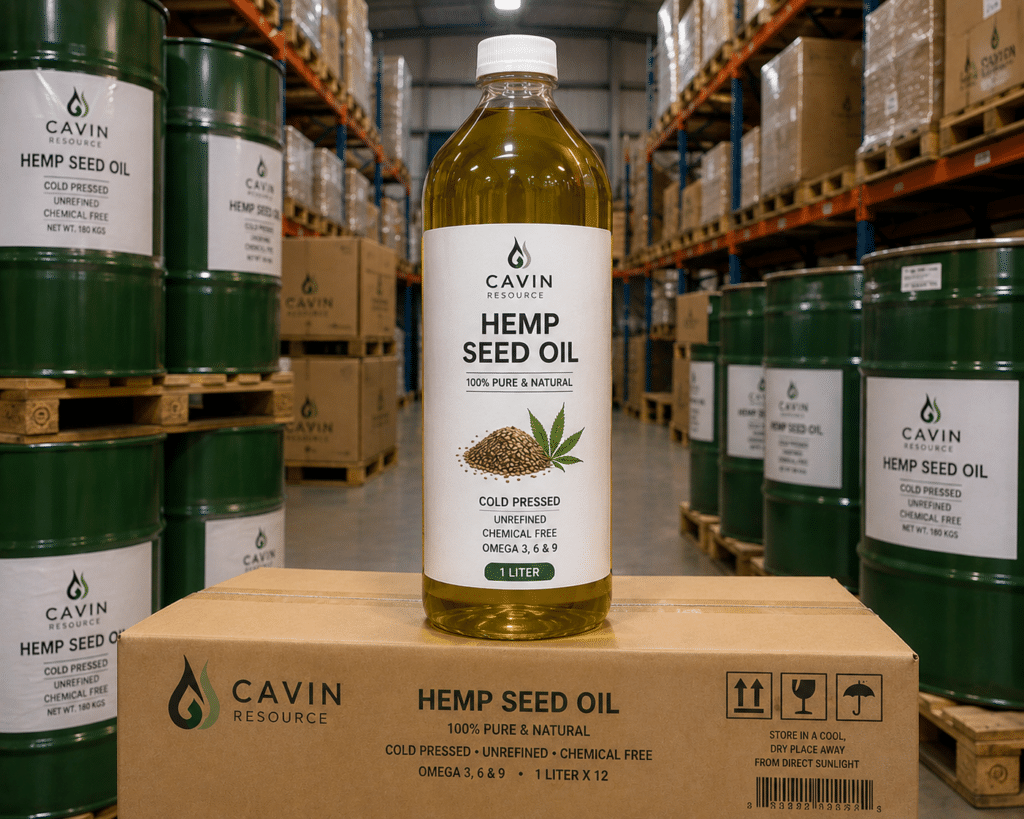
It’s worth being explicit about this: food-grade hemp seed oil, pressed from the seeds, is a different product from hemp extract or CBD oil, which typically comes from the plant’s flowers and leaves. Buyers and their customers sometimes conflate the two, which can create confusion in labeling and marketing that’s worth avoiding from the outset.
Flavor and Culinary Positioning
Hemp seed oil has a distinctive, mildly nutty, grassy flavor that limits its use as a neutral cooking oil but suits finishing applications, dressings, and certain cosmetic and nutraceutical formulations where its flavor and fatty acid profile are assets rather than drawbacks.
Stability Considerations
Like other high-PUFA oils, hemp seed oil is relatively prone to oxidation and benefits from cool, dark storage and reasonably prompt turnover. It’s not typically positioned as a long-shelf-life pantry staple.
Sourcing Checklist
- Confirm cold-pressed extraction and fatty acid profile documentation
- Clarify that the product is seed oil, not hemp/CBD extract, in your own labeling
- Request recommended storage conditions and shelf life
- Check import regulations specific to hemp-derived products in your market
Contact our team for current hemp seed oil availability, specifications and bulk pricing.

