
Two Different Products From the Same Nut
Cold-pressed and refined pecan oil start from the same raw material but end up as fairly different products, suited to different purposes. Understanding the trade-offs helps avoid ordering an oil that doesn’t fit the intended application.
Flavor Retention
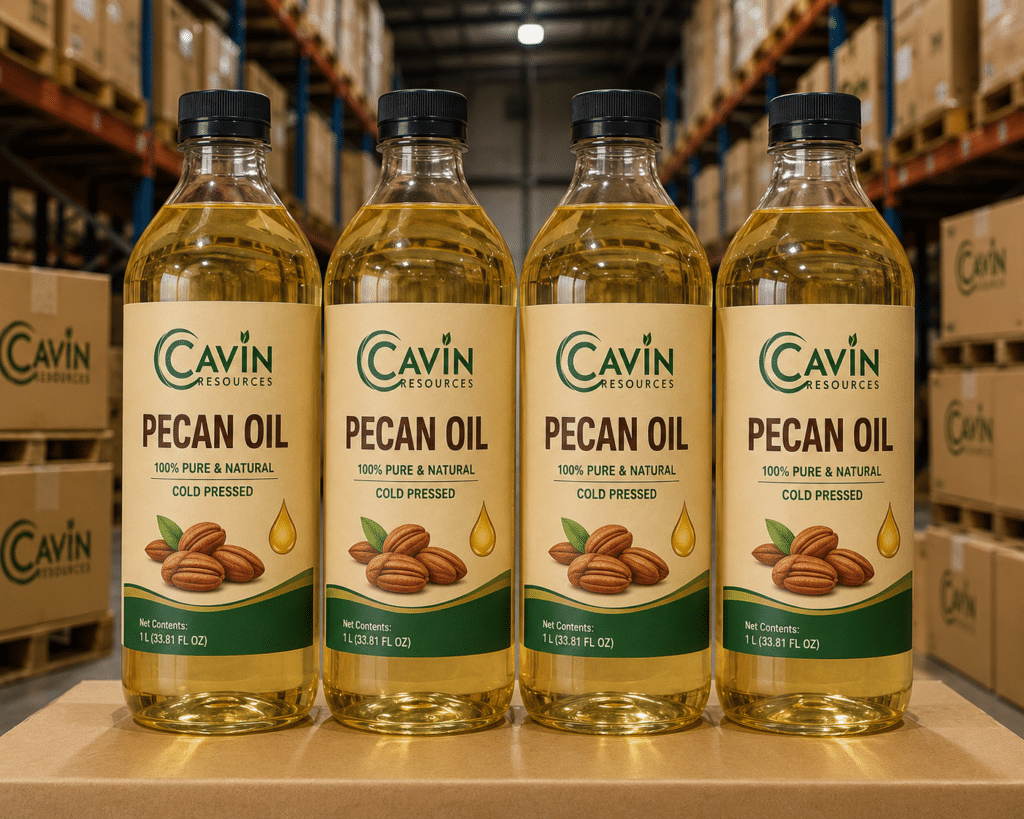
Cold-pressed pecan oil, produced without heat or chemical solvents, generally retains more of the nut’s characteristic flavor and aroma. This makes it a common choice where the pecan flavor itself is the point — finishing oils, certain baked goods, or flavor-forward applications.
Stability and Shelf Life
Refined pecan oil typically has better oxidative stability and longer shelf life, partly because refining removes some compounds that are otherwise prone to degradation. This trade-off — more neutral flavor for better stability — mirrors what’s seen across most nut and seed oils.
Heat Tolerance
Refined versions generally tolerate more heat before flavor and nutritional degradation become noticeable, though pecan oil overall still isn’t typically positioned as a high-heat frying oil regardless of refining level.
Cost and Availability Trade-offs
Cold-pressed oils are often more expensive to produce and can have more batch-to-batch variability in flavor intensity. Refined oil tends to offer more consistency at a lower price point, which matters for large-scale formulation work requiring predictable results.
Deciding Between the Two
- Is the pecan flavor itself a key selling point of your finished product?
- What shelf life does your product need to achieve?
- Will the oil be exposed to significant heat during processing?
- How much batch-to-batch consistency does your formulation require?
Contact us to discuss cold-pressed and refined pecan oil options, specifications and bulk pricing.

