
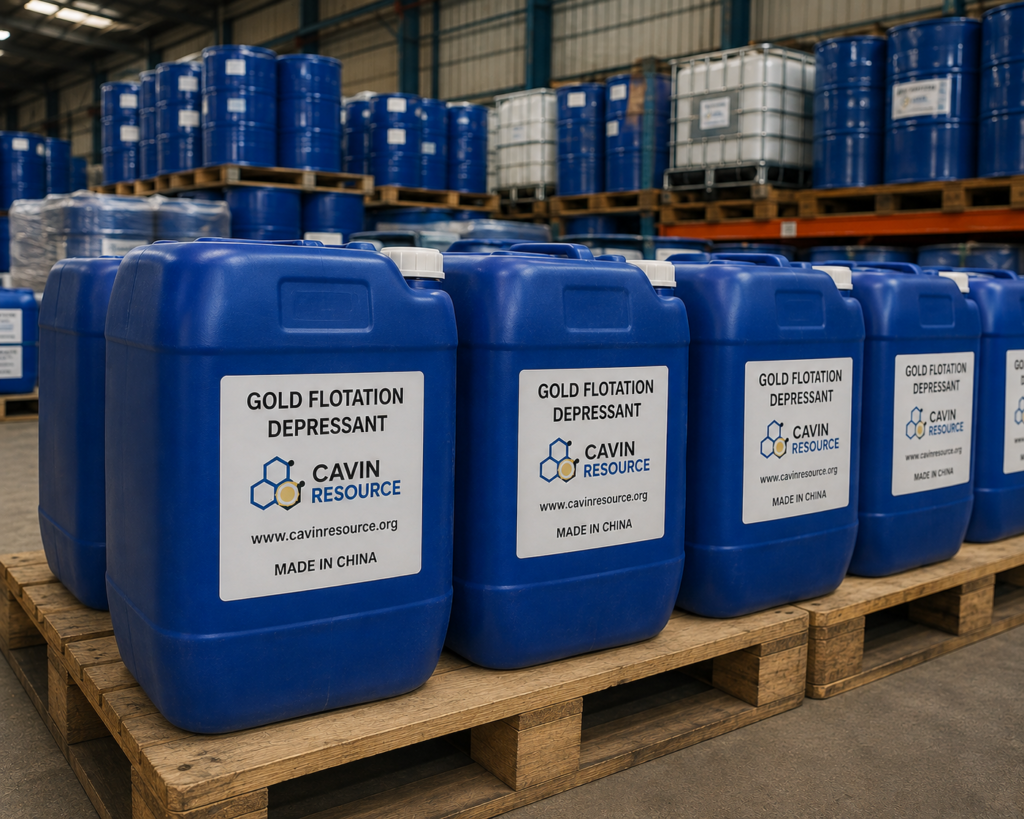
Depression Is About Selectivity, Not Just Suppression
In gold flotation, a depressant’s job isn’t simply to stop gangue minerals from floating — it’s to do so selectively, without dragging down gold recovery in the process. That balance is the entire challenge of depressant selection, and it’s why a depressant that works well on one ore body can underperform badly on another.
Common Depression Targets in Gold Circuits
Gold flotation circuits often need to depress pyrite, talc, or other gangue sulfides and silicates depending on the ore. The right depressant chemistry depends on which of these minerals is causing the most trouble in your specific concentrate, and how tightly associated they are with the gold-bearing minerals you want to keep.
pH-Dependent Behavior
Many depressants used in gold flotation are highly pH-sensitive, meaning their effectiveness can shift meaningfully with relatively small pH changes elsewhere in the circuit. This is one more reason depressant trials should happen alongside — not independently of — your existing reagent suite and operating pH.
Testing Against Your Actual Ore
Because mineralogical associations vary so much between ore bodies, generic depressant recommendations only go so far. Bench flotation testing against representative samples remains the standard way to confirm a depressant’s real-world selectivity before it’s scaled to plant use.
What to Ask Before Buying
- Which specific gangue minerals is this depressant most effective against?
- What pH range does it require to perform as expected?
- What dosage range has been validated in similar ore types?
- What documentation (TDS, SDS) is available for internal review?
Reach out to discuss depressant options, technical documentation and bulk pricing for your gold flotation circuit.

