
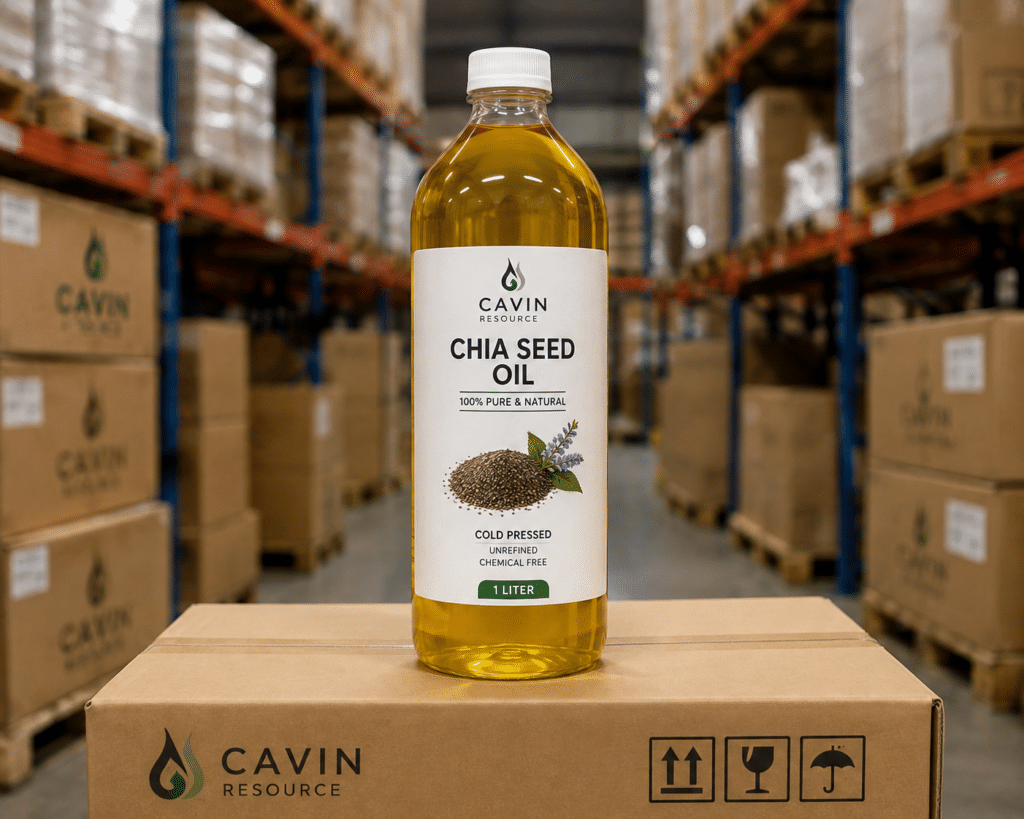
One of the Richest Plant Sources of ALA
Chia seed oil stands out among plant-based oils for its notably high alpha-linolenic acid (ALA) content — the plant-based omega-3 fatty acid. This has made it a popular ingredient in nutraceutical, functional food, and cosmetic formulations targeting omega-3 positioning without relying on marine sources.
Cold-Pressed Extraction Is the Norm
Because chia seed oil’s beneficial fatty acids are heat-sensitive, cold-pressed extraction is the standard method used to preserve nutritional quality. Buyers should confirm extraction method explicitly, since heat-processed alternatives can significantly reduce the ALA content that’s often the entire reason for sourcing this oil.
Cosmetic Applications Alongside Food Use
Beyond ingestible applications, chia seed oil is also used in skincare formulations for its emollient properties and antioxidant content, giving it a dual-market appeal that some other specialty oils lack.
Stability Requires Active Management
Chia seed oil’s high polyunsaturated fat content, while nutritionally valuable, also makes it one of the more oxidation-prone specialty oils. This isn’t a reason to avoid it, but it does mean storage discipline, appropriate packaging, and reasonable shelf-life expectations matter more here than with more stable oils.
Sourcing Checklist
- Confirm cold-pressed extraction and request ALA content data
- Ask about added antioxidants and their type
- Request recommended storage conditions and validated shelf life
- Clarify organic/conventional status and relevant certifications
Contact our team for current chia seed oil availability, specifications and bulk pricing.

