
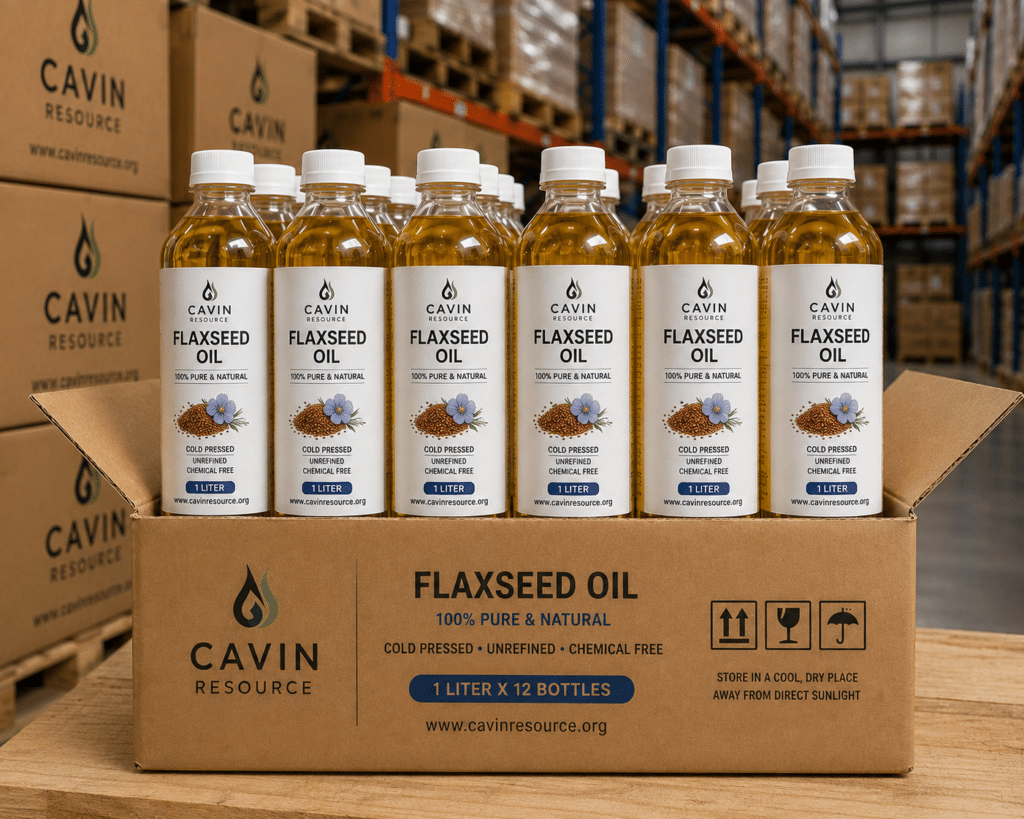
Among the Richest Plant Sources of Omega-3
Flaxseed oil is well known in nutraceutical circles for its exceptionally high alpha-linolenic acid (ALA) content, often cited as one of the richest plant-based sources of omega-3 fatty acids available. This is the primary driver of demand across supplement, functional food, and fortified product categories.
Extraction Method Affects Nutritional Retention
Because ALA and other beneficial compounds in flaxseed oil are heat-sensitive, cold-pressed, expeller-pressed extraction is the standard for products targeting a nutritional positioning. Solvent-extracted or heat-processed alternatives may compromise the very qualities that make flaxseed oil valuable for this use case.
One of the More Oxidation-Prone Specialty Oils
Flaxseed oil’s very high polyunsaturated fat content, while nutritionally valuable, also makes it particularly susceptible to oxidation — among the more demanding specialty oils in terms of storage and handling requirements. This isn’t a minor footnote; it materially affects realistic shelf life expectations.
Packaging and Storage Implications
Opaque, oxygen-barrier packaging and cold-chain or at least cool storage are commonly recommended for flaxseed oil to preserve quality through distribution. Standard ambient-temperature, clear-container storage suited to more stable oils isn’t a good fit here.
Sourcing Checklist
- Confirm cold-pressed extraction and request ALA content documentation
- Ask about added antioxidants and recommended storage temperature
- Request realistic shelf-life data under your actual storage/transport conditions
- Clarify organic/conventional status and relevant certifications
Contact our team for current flaxseed oil availability, specifications and bulk pricing.

