
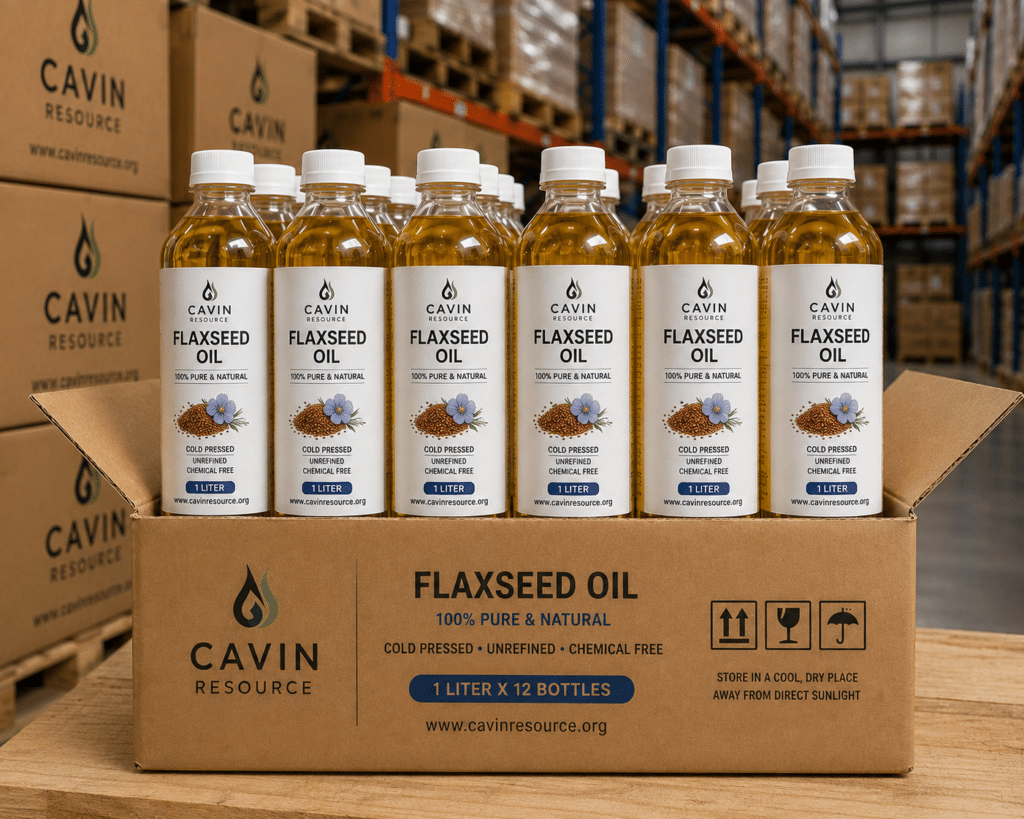
The Cost of Getting Storage Wrong
Few specialty oils punish poor storage practice as quickly and visibly as flaxseed oil. Its very high polyunsaturated fat content means oxidation — and the resulting rancidity, flavor loss, and nutritional degradation — can happen faster than buyers used to more stable oils might expect.
Temperature Control From Supplier to End Use
Ideally, flaxseed oil is kept refrigerated or at least consistently cool from the point of pressing through to final use. Gaps in that cold chain — even relatively brief ones during transport or warehousing — can meaningfully shorten usable shelf life.
Light and Oxygen Are Equally Important
Beyond temperature, protecting flaxseed oil from light exposure and minimizing oxygen contact (through opaque, well-sealed, appropriately sized containers) are just as critical. All three factors — heat, light and oxygen — compound each other, so weakness in one area isn’t fully offset by strength in another.
Signs the Cold Chain Has Been Compromised
An off, paint-like or fishy odor, noticeable flavor change, or unexpected color shift are all signs flaxseed oil may have been mishandled somewhere along its journey. These signs can appear well before an oil becomes unsafe, but they signal a quality issue worth investigating with your supplier.
Practical Handling Checklist
- Confirm the supplier’s own cold-chain practices from pressing to shipment
- Specify opaque, appropriately sized packaging for your order
- Maintain cool, consistent storage on your end once received
- Plan inventory turnover realistically around flaxseed oil’s shorter stable shelf life
Contact our team for current flaxseed oil specifications, packaging options and bulk pricing.

