
A Distinctive Oil With a Narrow Margin for Error
Pistachio oil’s appeal in food manufacturing comes from its distinctive, mild nutty flavor and pale green color — qualities that are also fairly easy to damage through poor extraction, storage or handling. Because it commands a premium price relative to more common nut and seed oils, getting the sourcing decision right matters more than it might for a commodity oil.
Extraction Method Shapes Flavor and Use Case
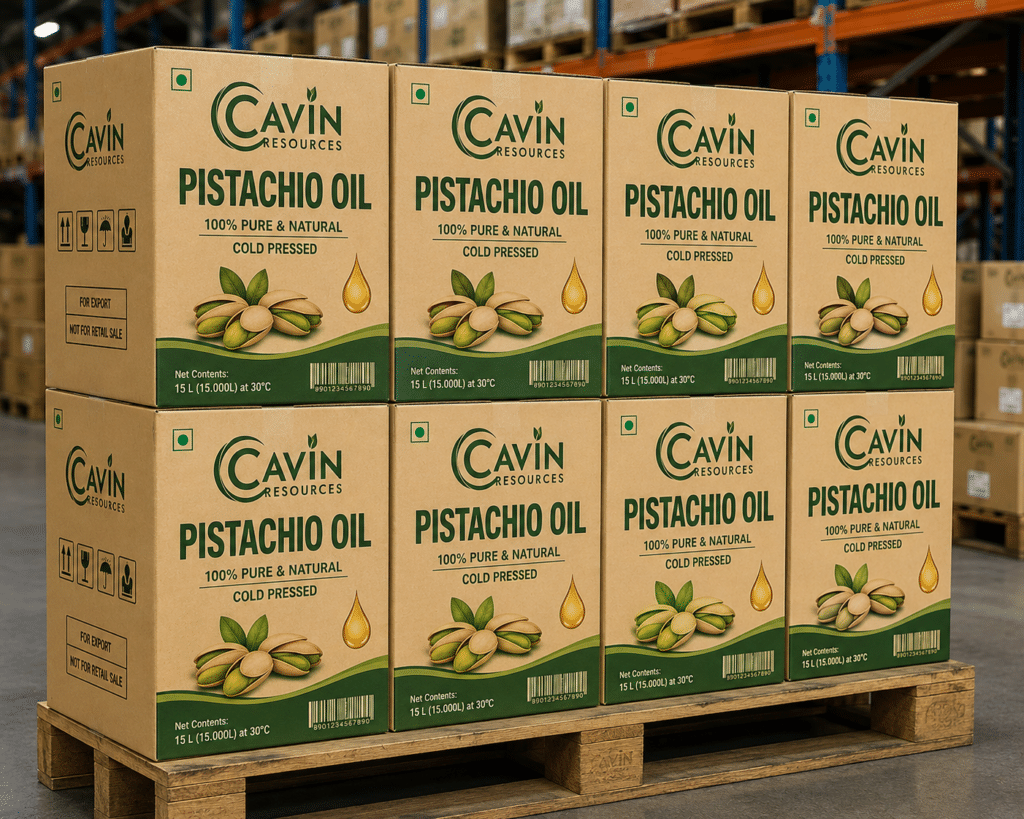
Cold-pressed pistachio oil tends to preserve more of the characteristic pistachio flavor and aroma, making it a common choice for finishing applications, dressings and confectionery. Refined versions offer more neutral flavor and typically better heat stability, which may suit different formulation needs. The right choice depends entirely on what the oil needs to contribute to your finished product.
Oxidative Stability Is a Real Consideration
Like many nut oils, pistachio oil’s unsaturated fat content makes it more prone to oxidation than more saturated oils. This affects everything from recommended storage conditions to shelf-life claims on finished products using it as an ingredient. Buyers should ask suppliers directly about peroxide value and recommended storage parameters rather than assuming standard vegetable-oil handling applies.
Documentation Worth Requesting
- Certificate of Analysis covering key quality parameters (free fatty acid, peroxide value, color)
- Extraction method and any refining steps applied
- Country of origin and any relevant food safety certifications
- Recommended storage conditions and shelf life under those conditions
Contact our team for current availability, specifications and bulk pricing on pistachio oil for your manufacturing needs.

