
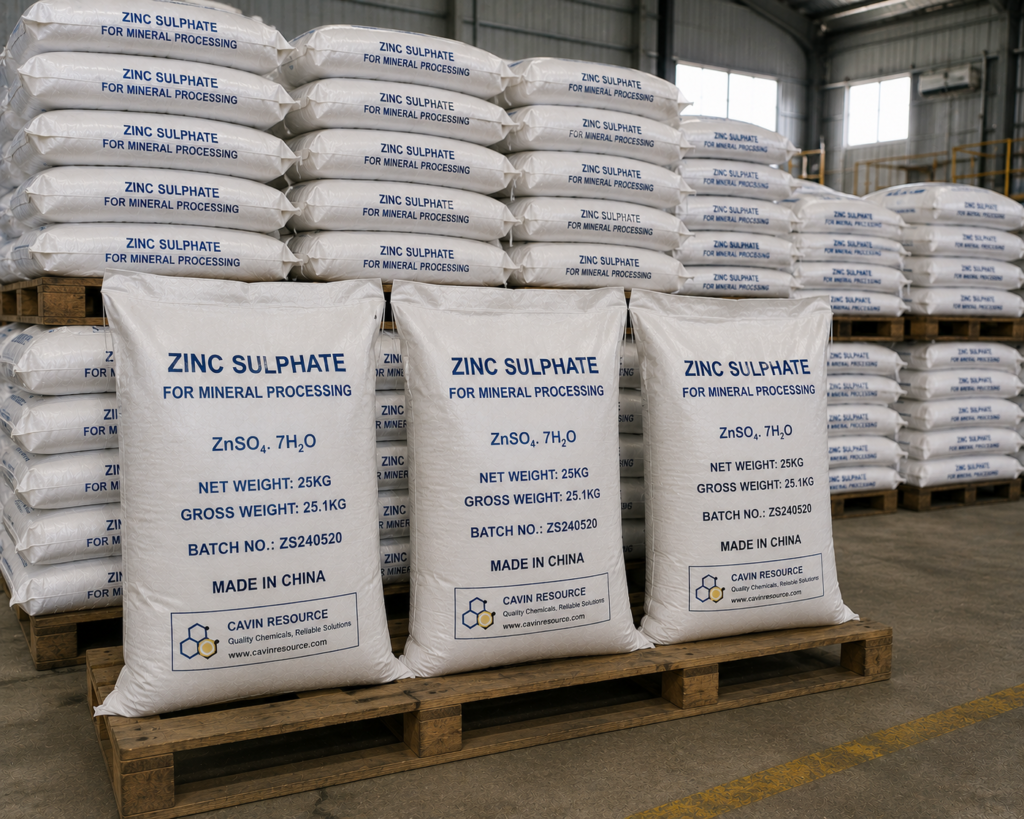
What a Depressant Actually Does
In selective flotation, the goal isn’t just to float valuable minerals — it’s to keep unwanted minerals from floating along with them. Zinc sulphate is one of the classic depressants used to suppress sphalerite (zinc sulfide) and certain other gangue minerals so they report to the tailings stream instead of the concentrate.
Where It’s Commonly Used
Zinc sulphate shows up most often in base-metal and polymetallic flotation circuits where selective separation between sulfide minerals is the whole point of the exercise — for example, separating copper or lead minerals from zinc-bearing gangue. Its effectiveness depends heavily on pH, the presence of activating ions, and the specific mineral assemblage.
pH and Interaction With Other Reagents
Depressant performance in flotation rarely exists in isolation. Zinc sulphate’s effectiveness is closely tied to circuit pH and to interactions with collectors, activators and other modifiers already in the system. Changing one reagent’s dosage without checking downstream effects on depressant performance is a common way flotation circuits drift out of their optimal operating window.
Getting Dosage Right Through Testing
As with most flotation reagents, the correct zinc sulphate dosage is ore-specific and circuit-specific. Bench-scale flotation testing, ideally using representative ore samples and existing plant reagent suite, remains the most reliable way to establish a working dosage before scaling up.
Sourcing Considerations
- Confirm purity grade and solubility characteristics for your dosing system
- Request current TDS and SDS documentation
- Discuss packaging formats matched to your consumption rate
- Clarify MOQ and lead times for ongoing supply continuity
Get in touch for current specifications, availability and bulk pricing on zinc sulphate for your flotation circuit.

