
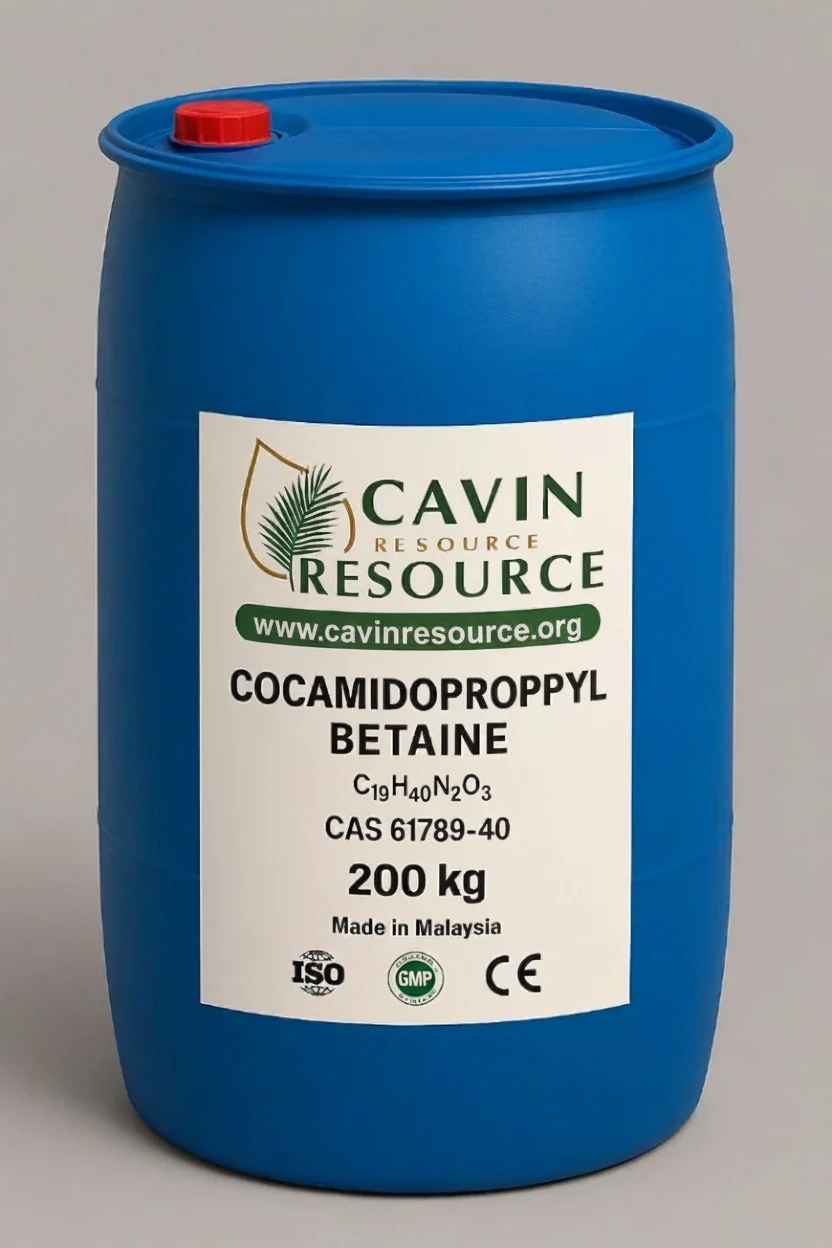
Cocamidopropyl Betaine (CAPB) is a coconut-derived surfactant formed by reacting coconut fatty acids with dimethylaminopropylamine, followed by quaternization with monochloroacetic acid. It is known for its excellent foaming, thickening, and cleansing properties and is compatible with both anionic and non-ionic surfactants.
This mild, amphoteric surfactant is ideal for formulations targeted at sensitive skin, including baby shampoos, facial cleansers, hand soaps, and body washes. It helps stabilize foam, reduce irritation potential, and improve the viscosity of detergent systems. In household and industrial cleaning products, CAPB enhances grease removal while remaining environmentally friendly.
Cavin Resource supplies Cocamidopropyl Betaine with high consistency, technical support, and documentation (COA, MSDS) for global B2B buyers.
Coconut Fatty Acid Condensation
-
Fatty acids from coconut oil are reacted with dimethylaminopropylamine (DMAPA).
-
The intermediate compound undergoes quaternization with monochloroacetic acid.
-
Final product is neutralized, refined, and formulated for industrial and cosmetic use.
🧴 Cosmetic & Personal Care
-
Key ingredient in baby shampoos, face cleansers, hand soaps, and bath gels
-
Offers rich lather and low eye/skin irritation
🧼 Household & Industrial Cleaning
-
Used in dishwashing liquids, multi-purpose cleaners, and car wash detergents
-
Enhances foam stability and grease removal
🧪 Chemical Formulation Enhancer
-
Compatible with anionic, non-ionic, and cationic surfactants
-
Useful in stabilizing emulsions and improving formula aesthetics
-
✅ Gentle surfactant – suitable for sensitive skin and baby care
-
✅ Boosts foam and viscosity in formulations
-
✅ Enhances cleansing and conditioning effects
-
✅ Reduces irritation potential of harsher surfactants
-
✅ Derived from renewable coconut sources
-
✅ Fully biodegradable and eco-friendly
-
200 kg HDPE drums
-
1,000 kg IBC tanks
-
Custom packing solutions available
-
Supplied with COA, MSDS, SDS
1. Is Cocamidopropyl Betaine safe for daily skincare products?
Answer: Yes. CAPB is widely used in mild skincare and baby products due to its low irritation and good skin compatibility.
2. Can it be mixed with other surfactants?
Answer: Absolutely. It is highly compatible with anionic, non-ionic, and amphoteric surfactants, improving foam and formulation stability.
3. Is it biodegradable?
Answer: Yes, CAPB is readily biodegradable and aligns with eco-label requirements.
4. What is the recommended usage rate in formulations?
Answer: Typically used at 3–10% concentration in final personal care or cleaning formulations depending on desired viscosity and foam.


Reviews
There are no reviews yet.